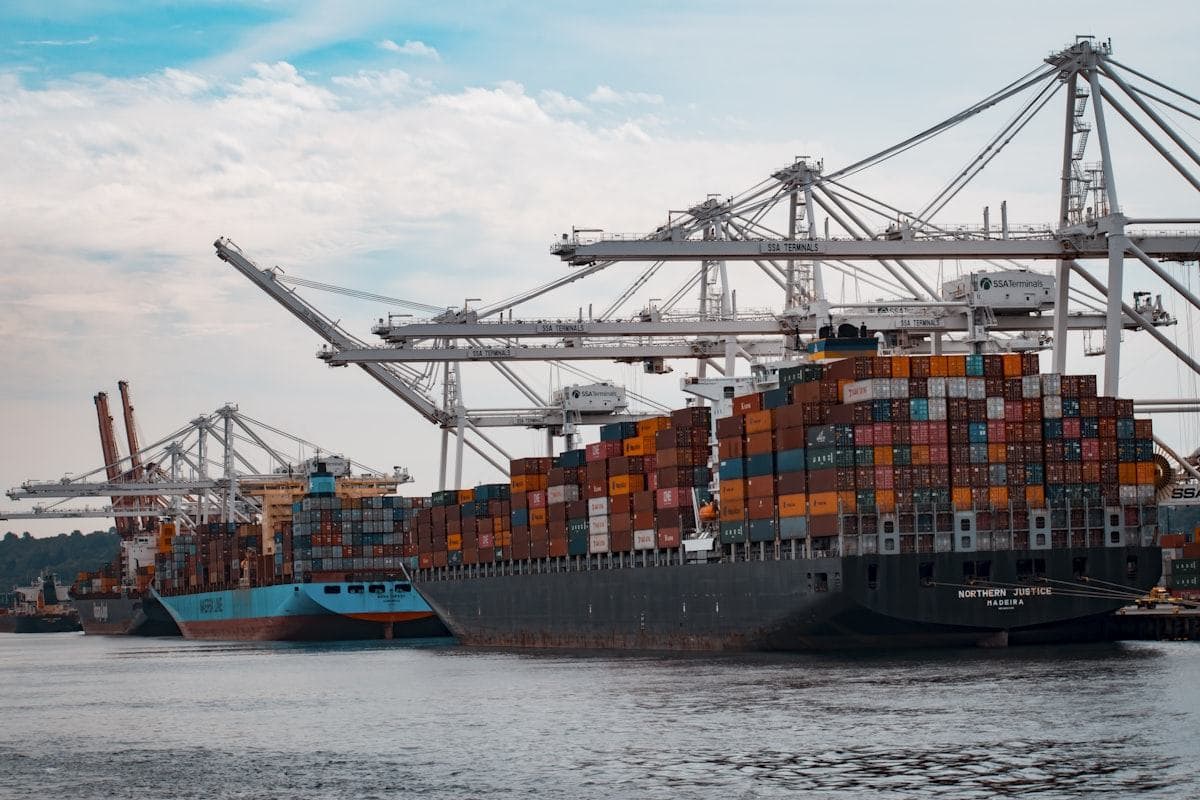
Shipping routes, transit times, documentation, landed cost and the practical realities of moving goods from a Chinese factory to a Bangladeshi warehouse.
The China–Bangladesh trade lane is well established and heavily used. That maturity works in your favour — routes are regular and rates are competitive — but it also means the process has fixed requirements that do not bend for a first-time importer.
Choosing a shipping mode
Sea freight carries the overwhelming majority of goods on this route. Full container load (FCL) makes sense once your volume fills a container; below that, less than container load (LCL) lets you pay for the space you use, at a higher rate per cubic metre and with additional handling.
Air freight costs several times more and is worth it only for goods with high value density, urgent stock replenishment, or samples and pre-production pieces.
Courier suits samples and very small shipments, with the simplest documentation.
Transit times vary with routing, transhipment and port congestion. Build a realistic buffer into your planning rather than assuming the fastest quoted time.
Incoterms decide who carries what
The Incoterm on your quotation determines where the supplier's responsibility ends and yours begins. Confusion here is one of the most common sources of unexpected cost.
- EXW (Ex Works) — you take responsibility from the factory door. Maximum control, maximum admin.
- FOB (Free On Board) — the supplier delivers to the port and handles export clearance. The most common arrangement, and usually the most practical.
- CIF (Cost, Insurance and Freight) — the supplier arranges freight and insurance to your destination port. Simpler, but you lose visibility of the freight margin.
- DDP (Delivered Duty Paid) — the supplier handles everything to your door. Convenient, and the most expensive.
For most Bangladeshi importers, FOB with your own freight forwarder gives the best balance of control and cost.
Documentation
Getting paperwork right is not optional, and errors are expensive because they are discovered at the port. You will generally need:
- Commercial invoice
- Packing list
- Bill of lading (or air waybill)
- Certificate of origin
- Letter of credit or the agreed payment documentation
- Product-specific certificates or permits where the category requires them
Every document must agree with every other. A mismatch between the packing list and the bill of lading, or between the invoice value and the LC, will hold your shipment.
Payment methods
Letter of credit (LC) is the standard instrument for Bangladeshi imports of any size. It protects both parties, but it is unforgiving: the documents must match the LC terms exactly, and a discrepancy delays payment and release.
Telegraphic transfer (TT) is faster and simpler, commonly structured as a deposit with the balance before shipment. It carries more risk for the buyer and is best reserved for suppliers you have an established record with.
Whichever you use, tie the final payment to a passed pre-shipment inspection wherever you can.
Calculating landed cost
Work this out before committing, not after the goods arrive:
- 1Unit price × quantity
- 2Freight to the destination port
- 3Insurance
- 4Customs duty and supplementary duty at the applicable rate for your HS code
- 5VAT
- 6Port and terminal handling charges
- 7Clearing and forwarding agent fees
- 8Inland transport to your warehouse
For bulky, low-value goods this exercise regularly changes the decision. A product that looks profitable at the factory gate can be uncompetitive once freight and duty are added.
Confirm your HS code early
The HS classification of your product determines the duty rate, and getting it wrong is costly in both directions — underpayment invites penalties, overpayment is simply lost margin. Confirm the classification with your clearing agent before you order, not when the container is at the port.
Consolidation is where the savings are
If you are buying from several suppliers, consolidating into a single shipment usually saves more than any price negotiation. One set of documents, one freight booking, one clearance. For smaller importers this is often the single largest cost lever available.
Building a durable process
The importers who do well on this route are not usually the ones who found the cheapest supplier. They are the ones who developed a repeatable process: a clear specification, verified suppliers, approved samples, inspection before shipment, and a realistic landed-cost calculation.
Get that process right once, and every subsequent order becomes routine.
Sourcing something similar?
Tell us the product, quantity and destination, and we will come back with supplier options and an indicative landed cost.